
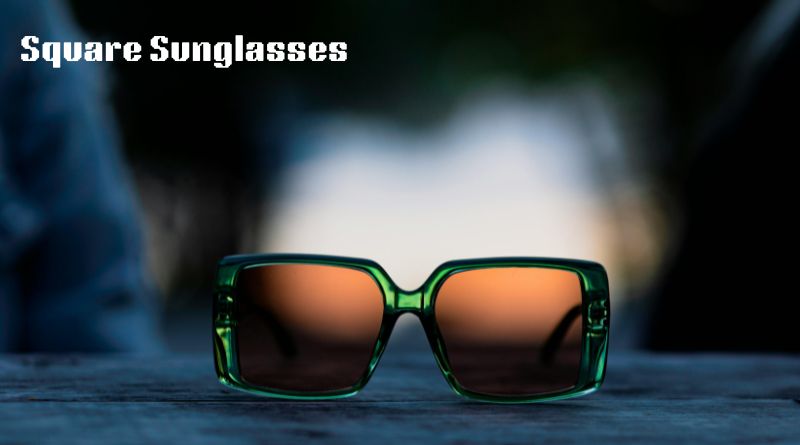
Square frames are eyewear characterized by angular lines, equal or near-equal width and height, and 90-degree or softly rounded corners. They exist to add structural definition to round or oval faces. They create a visual anchor. You wear them to manufacture authority out of thin air. Most consumers buy them blindly based on a brand name, completely ignoring the basic rules of facial geometry. The global eyewear conglomerates bank on this ignorance. You buy a $500 piece of molded plastic because a celebrity wore it on social media. You ignore the bridge width. You ignore the lens height. The frames slide down your nose. You look foolish. You could have avoided this by understanding basic optical engineering.
The Anatomy of Angular Eyewear
The manufacturing of quality sunglasses involves specialized materials and precise calibration. Cheap brands use injection-molded plastics. This is a process that shoots liquid plastic into a mold and spits out a frame in ten seconds. The frames warp in the sun. The hinges snap. True quality requires cellulose acetate. This is a plant-based plastic derived from wood pulp and cotton linters. It is hypoallergenic. It holds its shape. It requires machining. It is cut from a solid block by a CNC router and then tumbled in wood chips for days to achieve a high polish. It can be permanently adjusted with heat. The hinges should be barrel hinges, ideally five-barrel or seven-barrel constructions, held together by stainless steel screws.
Lenses dictate the actual utility of the product. The frame is just the housing. The lenses are the engine. CR-39 is the standard for high-end optical clarity. It is a plastic polymer that resists scratches. Polycarbonate is the alternative. It is impact-resistant. It is used for sports and industrial safety. It scratches easily. Glass lenses offer the absolute highest optical clarity but add significant weight. Heavy glasses press into the bridge of your nose. They cause severe headaches.
The geometry of a square frame is inherently bold. The sharp angles create a visual contrast against the natural curves of the human skull. This contrast is a deliberate design choice. It is not an accident. Brands design these frames to project dominance. You put them on, and your face instantly appears wider and more defined. This is optical illusion 101. It works. The industry knows it works.
What Is the Business of Fashion Telling Us?
The fashion industry operates on margins that would make a software executive blush. You are paying for a licensing agreement. A massive Italian conglomerate manufactures the frames for almost every major luxury brand you can name. They control the supply chain. They control the retail outlets. They dictate the ultimate price.
According to recent economic data, the broader apparel and accessories market is bracing for a slowdown. Analysts project a top-line growth of 2 to 4 percent in 2024, driven largely by price increases rather than volume growth. The luxury segment will capture most of this profit. The mid-tier market will bleed. Brands will squeeze every penny out of consumers by releasing “new” collections that are just recycled designs from the 1990s. The angular frame trend is part of this recycling loop. They dust off a 30-year-old blueprint, widen the temples, slap a gold logo on the side, and charge a 400% markup. The conglomerates buy up small independent brands. They gut the manufacturing process. They move the factories to cheaper regions. They maintain the retail price. Consumers buy it. The cycle continues. You need to look past the marketing. Evaluate the product based on its physical properties, not its marketing budget.
Why Do Proportions Matter in Eyewear?
A well-made pair of glasses will look terrible if the proportions are wrong. The human eye detects asymmetry instantly. If your glasses are too wide, your eyes will appear too close together. If they are too narrow, your face will look artificially wide.
You have to measure your pupillary distance. This is the distance in millimeters between the centers of your pupils. The optical center of the sunglass lens must align with your pupil. If it does not, you will experience eye strain. You will get migraines. The sharp angles of a square design amplify these errors. A round frame is forgiving. A sharp corner is merciless. If the frame extends past the widest part of your cheekbones, it is too big. If the temples splay outward to reach your ears, the frame is too small.
Before you invest, visualize the geometry. Use this tool to see the math in action.
It is basic math. If you do not do the math, you waste your money. When you learn how to choose accessories for your face shape, you stop relying on luck.
How Do Square Frames Impact Eye Health?
We need to talk about radiation. The sun is constantly bombarding your retinas with ultraviolet radiation. Most people treat sunglasses as a fashion accessory. They are a medical device. You wear them to prevent your eyes from cooking in your skull.
Ultraviolet A and Ultraviolet B are the primary threats. UVB causes sunburn. UVA is insidious. UVA penetrates deeper into the skin and passes straight through the cornea, reaching the lens and retina. Long-term exposure degrades the proteins in your eye. This leads to cataracts. It leads to macular degeneration. The World Health Organization estimates that roughly 15 million people are blind due to cataracts, with up to 10% of those cases directly attributable to UV exposure. This is not a hypothetical risk. It is statistical certainty. Photokeratitis is another factor. It is essentially a sunburn on your eye. It feels like sand under your eyelids. It is agonizing. It happens when UV rays reflect off bright surfaces like water, snow, or white concrete.
Larger frames provide better coverage. The sharp corners and wide temples of square designs offer superior lateral protection compared to small, round wire frames. UV rays bounce off pavement. They hit your eyes from the sides. Thick acetate temples block this peripheral radiation.
Yet, consumers remain dangerously apathetic. Data shows that only 31 percent of Americans wear sunglasses every time they’re outside. The other 69 percent are actively compounding cellular damage. Dark lenses without UV protection are worse than wearing nothing at all. The dark tint causes your pupils to dilate. The dilated pupil allows massive amounts of unfiltered UV radiation into the eye. It is a highly efficient way to destroy your vision. Always verify the UV400 rating. If the sticker is missing, put the glasses back on the shelf.
Are Square Frames Right For Your Face Shape?
Not everyone can pull this off. Do not force a trend that fights your anatomy.
- What is the impact on round faces? This is the optimal pairing. The sharp, straight lines cut across the natural curves of the face. It elongates the appearance of the jaw. It provides immediate structure.
- How do oval faces handle angular frames? Oval is the most versatile bone structure. You can wear almost anything. Angular frames will work perfectly, provided the width matches your cheekbones exactly.
- Should square faces wear square frames? Avoid them. You already have sharp angles. Putting a box on a box creates a rigid, aggressive aesthetic. You need curves to soften your jawline. Opt for round or aviator styles.
- What about heart-shaped faces? Proceed with extreme caution. A heavy, dark square frame will overpower a narrow chin. If you must wear them, choose a lighter color like tortoiseshell or a translucent acetate to reduce the visual weight.
You have options. If your bone structure supports it, square sunglasses remain one of the most effective tools for an immediate aesthetic upgrade. Fit dictates function.
How to Style Square Frames for Different Occasions?
You do not wear the same shoes to the beach and the boardroom. Your eyewear must adapt to the environment.
- What is the standard for formal events? Keep it understated. Black or dark tortoiseshell frames. Solid grey or brown lenses. No mirrored coatings. Mirrored lenses at a wedding signal a profound lack of self-awareness. Thin acetate or wire rims work best here.
- How should you approach casual settings? This is where you manipulate color. Olive green, translucent grey, or amber frames. Gradient lenses. The sharp geometry already provides structure; the casual colors soften the overall impact.
- What about active outdoor environments? Function overrides form. You need polarized lenses to cut glare from water or asphalt. You need rubberized nose pads so the frames do not slide off your face when you sweat. The fashion industry ignores utility. You cannot afford to. Look into sustainable fashion brands to watch for companies that prioritize both durable materials and manufacturing ethics.
The Buyer’s Checklist
Before you hand over your credit card, run through this checklist. Do not compromise.
- UV Protection Rating: Must specify UV400 or 100% UVA/UVB blocking. If it just says “absorbs UV,” it is garbage.
- Hinge Quality Test: Open and close the arms. There should be stiff resistance. Loose, floppy hinges indicate cheap manufacturing and impending failure.
- Lens Material Check: CR-39 for clarity, polycarbonate for impact resistance. Tap the lens with your fingernail. If it sounds hollow and thin, it is cheap plastic.
- Acetate vs. Injection Molded: Look for the metal wire core running through the temples. Injection-molded plastic does not have a wire core because it cannot be adjusted. Acetate has the wire core for strength and heat-adjustment.
- Polarization Verification: Look at an LCD screen (like your phone or a gas pump monitor) through the lenses. Rotate the glasses 90 degrees. If the screen goes completely black, the lenses are polarized. If nothing happens, they are not.
The industry relies on impulse purchases. They place the racks near the register. They use bright lights. They want you to buy based on pure emotion. A cynical buyer tests the hinges, checks the wire core, and verifies the polarization before looking at the price tag.
In Sum
The optical market is a machine designed to separate you from your capital through licensed branding and artificial scarcity.
- Angular frames provide structural definition for round and oval faces, relying on geometric contrast to manufacture a dominant aesthetic.
- The materials matter exponentially more than the logo. Cellulose acetate and five-barrel hinges represent the absolute baseline for acceptable quality.
- UV400 protection is a non-negotiable medical necessity, not an optional feature. Unprotected dark lenses actively accelerate retinal damage by dilating the pupil.
- The broader fashion industry is extracting higher margins through price hikes rather than innovation, meaning consumer diligence is a financial requirement.
- Proportions dictate success or failure. Align the optical center with your pupillary distance and ensure the frame width matches your cheekbones perfectly.
You now possess the operational knowledge to navigate the eyewear market without being exploited. The geometry is established. The medical realities are documented. The economic landscape is exposed. Make your purchase based on hard data.
